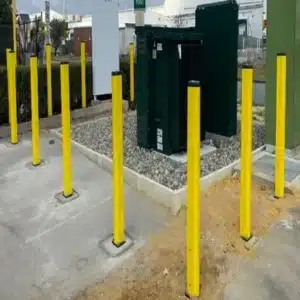
In busy industrial environments, accidents are inevitable. Forklifts collide with doors, walls, racking, and machinery every day. These impacts can cause significant damage to infrastructure, lead to expensive downtime, and, most importantly, create serious safety risks for employees.
At Industrial Safety Barriers, we know the true cost of a collision goes far beyond a bent barrier. That’s why we’re proud to supply and install the DEFLEX range of impact protection barriers – a next-generation solution designed to protect your workplace, your people, and your productivity.
And the proof is right in front of you. 🎥 In the video below, watch a forklift drive directly into a DEFLEX barrier. Instead of bending, denting, or transferring the impact to surrounding structures, the barrier flexes, absorbs the energy, and then returns to its original shape. This simple but powerful innovation is what makes DEFLEX a smarter choice for modern facilities.
The Problem with Traditional Steel Barriers
For decades, steel has been the go-to material for safety barriers in warehouses and factories. While strong, steel has two major weaknesses:
- It transfers impact energy into the floor, walls, or surrounding infrastructure, often causing more damage than it prevents.
- It doesn’t recover from impact. Once dented, bent, or chipped, steel barriers not only look unprofessional but also become less effective over time.
The result? Ongoing repair costs, safety risks, and an environment that isn’t truly protected.
Why DEFLEX Is Different
DEFLEX barriers are built from advanced polymer technology, specifically engineered to flex under pressure. When struck by a forklift or pallet truck, the barrier bends with the force, disperses the impact energy safely, and then returns to its original form.
This innovation provides several key benefits:
✅ Compliance & Efficiency – Helps businesses meet safety standards while keeping operations flowing smoothly.
Where Can DEFLEX Be Used?
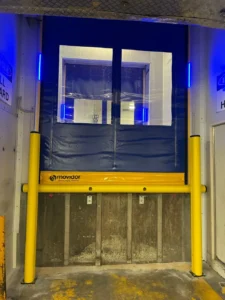
- Warehouses & Distribution Centres – Protect shelving, racking, and loading bays from forklift damage.
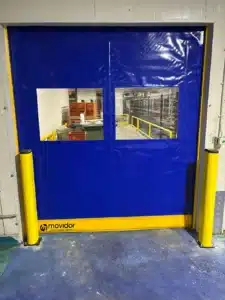
- Food & Beverage Production Facilities – Safeguard cold rooms, processing areas, and rapid doors where hygiene and uptime are critical.
- Supermarkets & Retail Back-of-House – Reduce risk of accidents in high-traffic areas.
- Manufacturing Plants – Protect expensive machinery and keep production lines safe.
Wherever there is movement, there is risk – and DEFLEX is designed to manage that risk effectively.
An Investment in Safety and Savings
Investing in impact protection barriers is not just about compliance – it’s about protecting people, reducing costs, and ensuring operational efficiency. With DEFLEX, businesses gain a long-term safety solution that pays for itself through lower maintenance bills and reduced downtime.
Accidents will always happen in busy workplaces. But with DEFLEX, the damage doesn’t have to.
📞 Contact Industrial Safety Barriers today to learn more about how DEFLEX can safeguard your workplace. And don’t forget to check out the video – seeing DEFLEX take on a forklift hit and bounce back to shape is proof of just how effective it is.
Call 1300 455 101 E [email protected]
#ImpactProtection #ForkliftSafety #IndustrialSafety #WarehouseSafety #DEFLEX #SafetyBarriers #PolymerBarriers #IndustrialSafetyBarriers