In industrial environments such as warehouses, logistics hubs, manufacturing plants and distribution centres, safety barriers play a critical role in protecting people, equipment and infrastructure. Traditionally, steel has been the default choice for impact protection. It is strong, widely available and well understood across the construction and facilities sector.
However, as operational demands increase and workplaces become more fast-paced, the limitations of traditional steel barriers are becoming more apparent. New-generation polymer systems such as Deflex barriers from Industrial Safety Barriers are changing how businesses approach impact protection by focusing not just on strength, but on energy absorption, durability and lifecycle cost.
So how do steel and Deflex systems really compare in real-world use?
The Role of Safety Barriers in Industrial Facilities
Before comparing materials, it’s important to understand what a safety barrier is actually designed to do. In most facilities, barriers are installed to:
- Separate pedestrians from moving vehicles such as forklifts
- Protect structural assets like racking, columns and walls
- Define traffic routes within high-risk areas
- Minimise damage from accidental impacts
In these environments, impacts are not rare-they are expected. That means the performance of a barrier system should be judged not only on whether it can withstand a collision, but on how it behaves before, during and after impact.
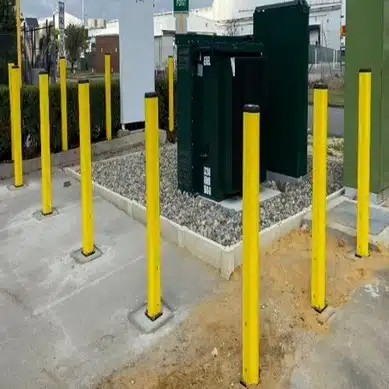
Steel Barriers: Strong, But Rigid
Steel barriers have been used for decades and remain common across many industrial sites. Their key advantage is their high structural strength and ability to withstand significant force.
However, their rigidity introduces several challenges in high-frequency impact environments:
Permanent deformation after impact
Steel does not absorb energy in a flexible way. Instead, it tends to bend or deform permanently. Even minor forklift contact can result in visible damage that requires repair or replacement.
Force transfer into the ground
One of the less obvious issues is how impact energy is transferred. Rather than dissipating force, steel barriers often pass energy directly into concrete slabs and fixings, potentially leading to cracking or long-term structural wear.
Ongoing maintenance costs
Once damaged, steel barriers typically cannot return to their original condition. This leads to repeated maintenance cycles, downtime and replacement costs over the life of a facility.
Corrosion and environmental wear
In environments exposed to moisture, wash-down procedures, or coastal air (such as Western Australia), steel is also vulnerable to rust and corrosion without ongoing protective treatment.
Deflex Barriers: Designed for Impact Absorption
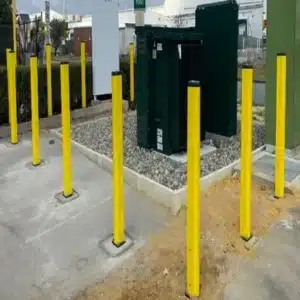
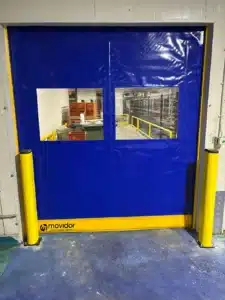
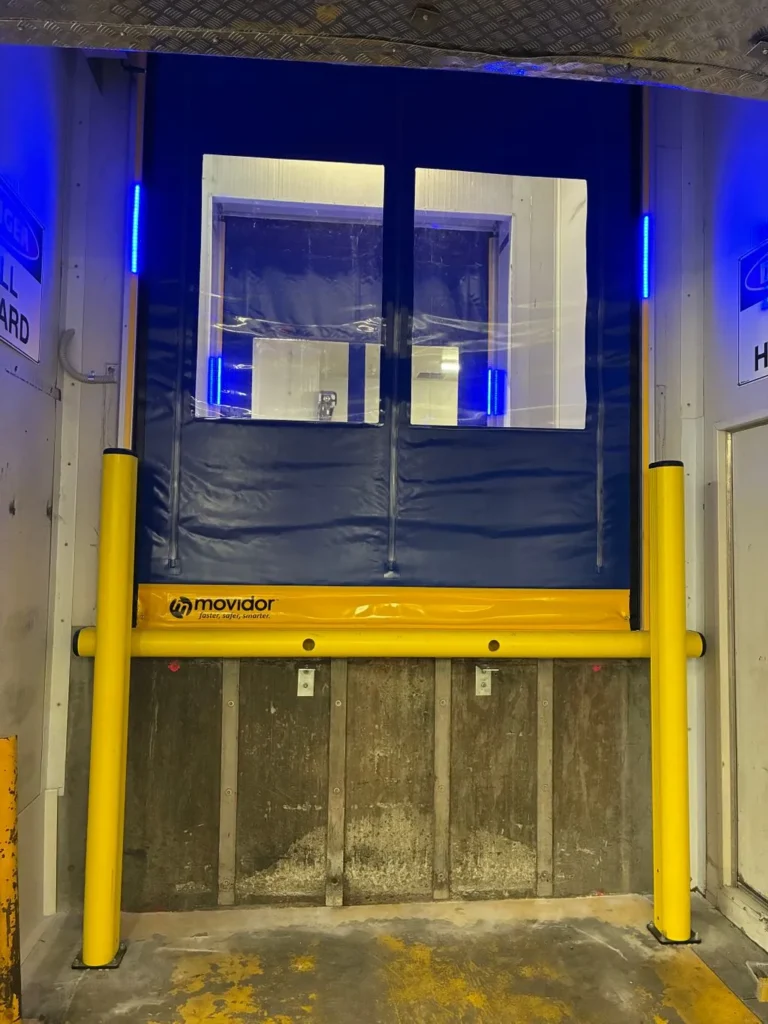
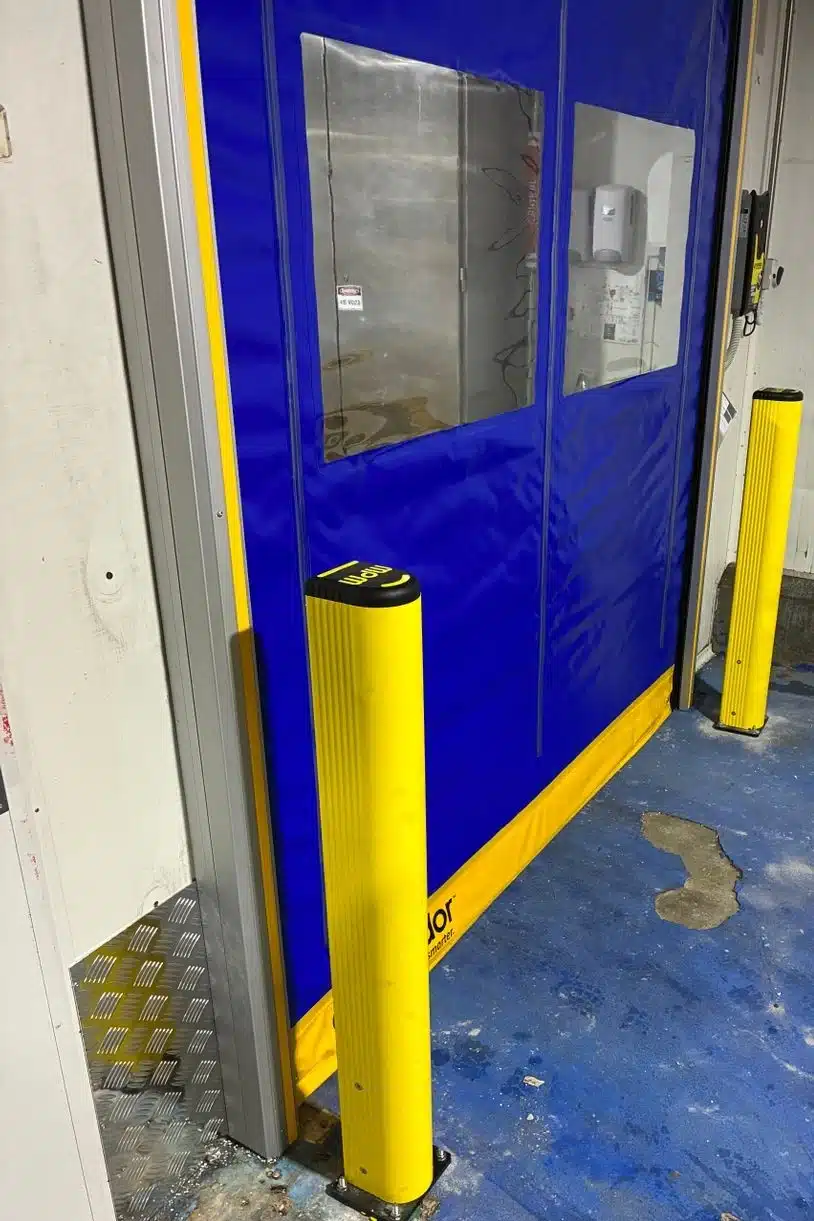
Deflex barrier systems take a fundamentally different approach to impact protection. Rather than relying on rigidity, they are engineered to flex and absorb impact energy, reducing damage to both infrastructure and equipment.
Key advantages include:
Energy absorption instead of resistance
When a forklift or vehicle makes contact, Deflex systems flex on impact and then return to their original shape. This reduces the likelihood of permanent damage.
Reduced structural damage
Because energy is absorbed within the barrier system itself, less force is transferred into the floor slab, reducing long-term damage to concrete and fixings.
Corrosion-free material
Manufactured from advanced polymers, Deflex barriers are ideal for harsh environments including cold storage, food processing facilities and coastal sites.
Lower lifecycle cost
While initial investment may be comparable to steel, reduced repair, replacement and downtime costs often result in significantly lower total cost of ownership over time.
High visibility and safety performance
Bright, consistent colouring improves hazard visibility, helping reinforce safe operating zones for both drivers and pedestrians.
Rethinking “Strength” in Industrial Safety
A common misconception in industrial design is that the strongest material is always the best choice. But in modern warehouse and logistics environments, true performance is not just about resisting impact-it’s about managing it intelligently.
Steel stops impact through rigidity.
Deflex manages impact through controlled flexibility.
This difference has a direct effect on maintenance schedules, operational downtime, workplace safety and long-term cost efficiency.
Final Thoughts
As facilities become more automated and forklift traffic increases, the demands placed on safety systems continue to grow. While steel barriers still have their place in certain heavy-duty applications, many operators are now reassessing whether rigid systems are the most efficient solution.
Deflex barrier systems represent a shift toward smarter impact management-designed not just to withstand damage, but to reduce it.
For businesses planning new builds or upgrading existing facilities, the question is no longer just “how strong is it?” but rather:
How does it perform over time under real-world conditions?
At Industrial Safety Barriers, we help clients evaluate and specify safety systems that align with operational demands, site conditions and long-term performance goals.
Call 1300 455 101 or email [email protected]