In busy industrial environments such as warehouses, logistics centres, manufacturing facilities, and distribution hubs, safety is a critical priority. With forklifts, pallet trucks, and other machinery constantly moving through workspaces, the risk of accidental collisions with equipment, doors, and structural elements is high. This is where industrial safety barriers play a vital role.
Industrial safety barriers are designed to create clear physical separation between vehicles, infrastructure, and pedestrian areas. By installing the right barrier systems, businesses can significantly reduce accidents, protect valuable assets, and improve overall workplace safety.
Why Industrial Safety Barriers Are Essential
In many facilities, forklifts and other vehicles operate close to important infrastructure such as industrial doors, walls, machinery, and loading docks. Without proper protection, even minor impacts can lead to costly damage and operational disruption.
Industrial safety barriers provide a highly effective solution by creating protective zones that prevent vehicles from striking vulnerable areas. These barriers absorb or deflect impact forces and help guide traffic safely through busy workspaces.
Beyond protecting infrastructure, safety barriers also help improve visibility and organisation within industrial facilities. Clearly defined pathways and protected areas reduce confusion and help operators navigate spaces more safely.
Common Types of Industrial Safety Barriers
There are several types of industrial safety barriers designed to suit different environments and protection requirements.
Safety Bollards
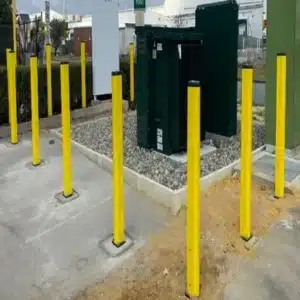
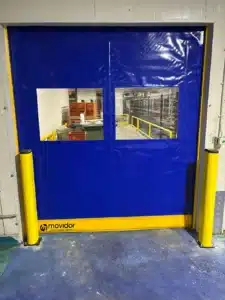
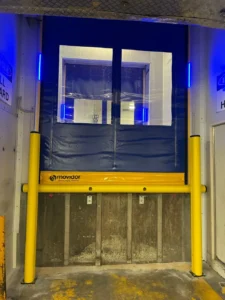
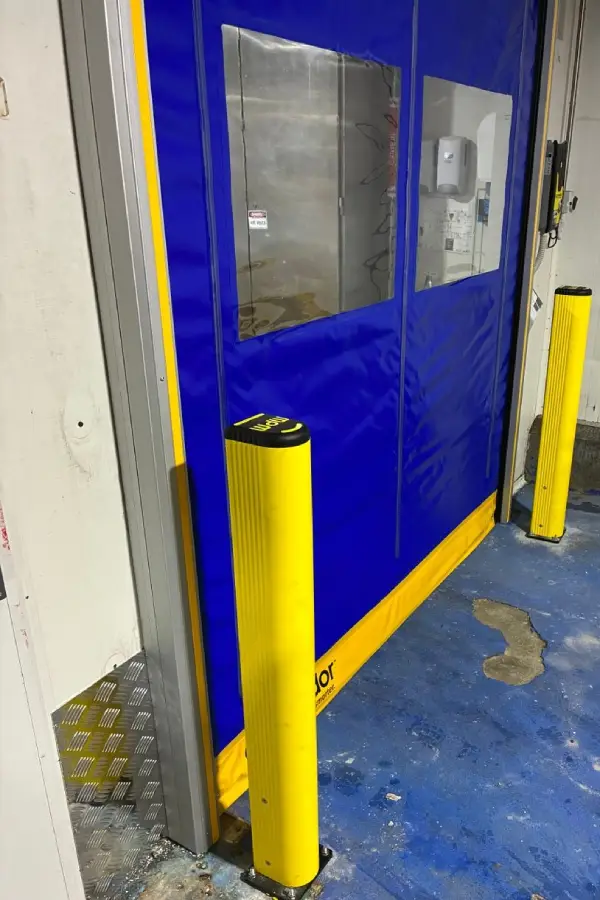
Safety bollards are one of the most widely used forms of industrial protection. These vertical posts are typically installed around doorways, machinery, and building corners to prevent forklifts or vehicles from making direct contact with important infrastructure.
Bollards are particularly effective for protecting industrial doors, loading bays, and equipment located in high-traffic areas.
Pedestrian Safety Barriers
Pedestrian barriers are used to separate walkways from forklift or vehicle traffic zones. These barriers help create safe walking routes for staff, reducing the risk of workplace accidents.
In busy warehouse environments, clearly defined pedestrian areas are essential for maintaining a safe working environment.
Rack Protection Barriers
Warehouse racking systems often store valuable inventory and materials. Rack protection barriers are designed to prevent forklifts from colliding with racking legs, helping maintain structural integrity and preventing stock damage.
Flexible Safety Barriers
Modern flexible safety barriers are designed to absorb and deflect impact energy rather than completely stopping it. This helps reduce damage to both the barrier and the vehicle involved in a collision. Flexible barriers are particularly useful in high-traffic areas where minor impacts may occasionally occur.
Key Benefits of Industrial Safety Barriers
Installing industrial safety barriers offers several important benefits for businesses operating in demanding environments.
Improved Workplace Safety
Barriers help separate vehicles from pedestrians and critical infrastructure, reducing the risk of accidents.
Protection for Infrastructure
Doors, machinery, walls, and racking systems are protected from forklift impacts, preventing costly damage.
Reduced Maintenance Costs
By preventing accidental collisions, businesses can reduce repair costs for industrial doors, equipment, and facility structures.
Better Traffic Management
Safety barriers help guide vehicle movement through warehouses and production areas, creating clearer traffic flow.
Increased Operational Efficiency
When infrastructure is protected and operations run smoothly, businesses can avoid downtime and maintain productivity.
Choosing the Right Safety Barrier System
Selecting the right industrial safety barrier system depends on several factors, including facility layout, vehicle traffic levels, and the areas that require protection.
Key considerations include:
- Areas with high forklift traffic
- Doorways and loading zones
- Pedestrian walkways
- Machinery and equipment locations
- Warehouse racking systems
A professional assessment can help determine the most effective barrier placement to maximise safety and protection.
Creating a Safer Industrial Environment
Industrial workplaces are fast-paced environments where safety must always remain a priority. Installing industrial safety barriers is one of the most effective ways to protect people, equipment, and infrastructure while maintaining efficient operations.
By implementing the right protection systems, businesses can reduce the risk of accidents, minimise costly damage, and create a safer working environment for staff and visitors.
If your facility is experiencing frequent equipment impacts or you are looking to improve warehouse safety, installing industrial safety barriers and protective bollards can provide a simple yet highly effective solution.
Call: 1300 455 101
Email: [email protected]