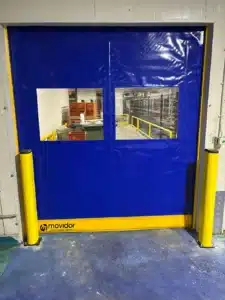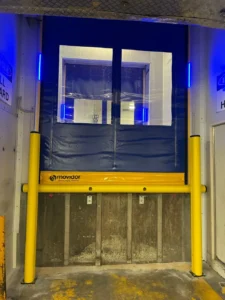
When it comes to workplace safety in warehouses, manufacturing facilities, logistics centres and distribution hubs, choosing the right safety barrier system is critical. Forklifts, pallet jacks and moving vehicles operate in close proximity to pedestrians, equipment and structural assets every day. While traditional metal barriers have long been used for impact protection, modern Deflex polymer barriers are proving to be a safer, more cost-effective alternative.
Understanding the difference between polymer safety barriers vs metal barriers can help businesses reduce injuries, minimise damage and lower long-term maintenance costs.
Deflex
What Are Deflex Polymer Barriers?
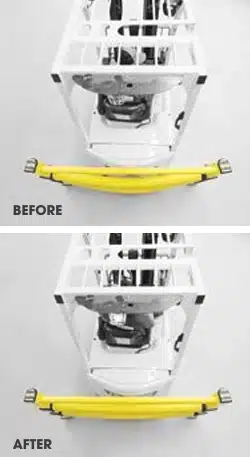
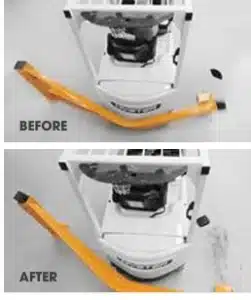
Deflex barriers are manufactured from advanced polymer materials engineered for strength, flexibility and durability. Unlike rigid steel barriers, Deflex systems are designed to flex and absorb impact energy, then return to their original shape.
This flexibility is the key difference – and the reason polymer barriers outperform metal in many industrial environments.
How Deflex Barriers Improve Workplace Safety
One of the biggest risks in industrial settings is the transfer of kinetic energy during a collision. When a forklift or vehicle strikes a rigid metal barrier, the impact energy is transmitted back to the vehicle, operator and surrounding infrastructure.
Deflex polymer barriers work differently:
- The barrier flexes on impact, absorbing energy rather than transferring it
- The kinetic energy is not passed on to operators or vehicles, significantly reducing injury risk
- Vehicles sustain less damage, helping reduce downtime and repair costs
- The barrier returns to its original shape, maintaining protection after impact
This makes Deflex barriers ideal for forklift safety, pedestrian protection, racking protection and traffic management within industrial facilities.
Metal
The Hidden Risks of Traditional Metal Barriers
Metal barriers may look strong, but their rigidity can create serious safety and cost issues over time.
When impacted, metal barriers:
- Deform permanently, often requiring full replacement
- Transfer high shock loads to forklift operators and vehicles
- Increase the risk of operator injury and vehicle damage
- Cause break-up and cracking of concrete flooring due to force transfer
- Are prone to rust and corrosion, leading to ongoing maintenance and repainting
While metal barriers may seem cost-effective upfront, the long-term expenses associated with repairs, replacements, damaged flooring and downtime can be significant.
Flooring Protection and Long-Term Cost Savings
One often overlooked advantage of Deflex polymer barriers is their ability to protect concrete flooring. Because impact energy is absorbed rather than transferred, there is far less stress on anchor points and floor slabs. This reduces cracking, spalling and expensive concrete repairs – a major cost saving for high-traffic sites.
Additionally, Deflex barriers maintain high visibility over time, with no rusting, flaking or repainting required. This ensures safety zones remain clearly marked and compliant without ongoing maintenance costs.
Why More Facilities Are Switching to Deflex Barriers
Businesses across Australia are increasingly choosing polymer safety barriers as part of their workplace safety strategy. Key benefits include:
- Improved workplace safety compliance
- Reduced injuries and near misses
- Lower vehicle and infrastructure damage
- Minimal maintenance and longer service life
- Reduced total cost of ownership
Choose the Right Safety Solution
At Industrial Safety Barriers, we specialise in Deflex polymer barrier systems designed to protect people, vehicles and assets in demanding industrial environments. Whether you’re upgrading from metal barriers or designing a new facility, choosing the right barrier material can make a measurable difference to safety outcomes.
If your site still relies on rigid metal barriers, now is the time to consider a smarter, safer alternative.
Call: (08) 9455 1234
Email: [email protected]